Amrood, the guava, is a winter fruit in Pakistan. The main crop ripens from late October and runs to February, it gets sweeter as the nights get colder, and the fruit everyone argues over comes from two places: Larkana in Sindh and the Sharaqpur belt outside Lahore. Pakistan grows roughly half a million tonnes of it a year, about four-fifths in Punjab, which makes guava the country's fourth fruit by volume after citrus, mango and banana, and the third in both Punjab and Sindh. A kilo in the mandi was around Rs 170 in the last week of October 2026 and will be cheaper at the December peak.
This guide covers the season, the growing districts, the varieties you will see on the cart, this winter's prices, what is actually in an amrood, how people eat it, and the one way we know to keep a Larkana guava past March.
When amrood is in season
Guava trees in Pakistan flower twice, so there are two crops. The winter crop, from flowers set in spring, is the one that matters: it starts arriving in late October, peaks in December and January and tails off in February. Cold nights are what make it good. As the temperature drops the fruit ripens slowly, holds less water and tastes sweeter, which is why a January amrood from the same tree beats a November one.
The summer crop, from a second flowering in the monsoon, ripens in June, July and August. It is smaller, softer and less sweet, and in the Larkana belt a large share of it is lost to heat and fruit fly before it reaches a market. Growers in Punjab often knock the summer flowers off so the tree puts everything into the winter fruit. If a cart is selling amrood in July, that is what it is.
Where the best amrood grows
Larkana, Sindh. The guava Larkana is known for across the country: elongated rather than round, thin-skinned, white-fleshed, and sweet enough that the district's name on a crate adds to the price. The orchards sit along the Indus upstream of Sukkur, and the crop ripens with the cold, so the best Larkana fruit is a December and January fruit. Guava is the third fruit of Sindh after mango and banana, and most of the province's crop is this one district's.
Sharaqpur and the Lahore belt, Punjab. Sharaqpur Sharif in Sheikhupura district, half an hour from Lahore, is the orchard town behind most of the guava sold in the city. The belt runs on through Lahore, Kasur and Gujranwala, with Faisalabad, Jhang and Sargodha further west. Punjab's four-fifths of the national crop comes from here.
Kohat and Haripur, Khyber Pakhtunkhwa. A smaller crop, later and sweeter for the colder nights, sold mostly within the province.
Which variety to buy
The names on a cart are shapes and colours more than cultivars, and they vary by city. The ones worth knowing:
- Gola. Round, white flesh, thin skin, the common Punjab guava. Reliable, mild, good value.
- Surahi. Pear-shaped, named after the long-necked water jug. Firmer flesh, fewer seeds in the neck, often the pricier one on the same cart.
- Safeda (Sufaida). The white-fleshed sweet type with the highest sugar in comparative trials at Faisalabad, and the one most often sold by name.
- Surkha, Lal Badshah. Pink-fleshed. Softer, more aromatic, bruises faster; the one for juice.
- Sadabahar. "Ever-bearing": a type that crops through more of the year, at the cost of the winter fruit's sweetness.
- Larkana. Not one cultivar but the district's elongated white types, which travel under its name.
Choosing on the cart: pick fruit that has turned from green to pale yellow-green, gives slightly to a thumb and smells of guava from a hand's distance. Deep green is a week away; a soft dark patch is a day too far. A ripe amrood keeps two or three days on the counter and about a week in the fridge, and it does not freeze well, because the flesh collapses when it thaws.
What a kilo costs this winter
Prices from the daily mandi rate lists in the last week of October 2026, at the start of the season:
| Where | Price per kg | Note |
|---|---|---|
| Mandi average, Pakistan | about Rs 170 | wholesale, 21 October 2026 |
| Lahore mandi | about Rs 210 | early-season Sharaqpur fruit |
| Karachi mandi | Rs 115–140 | Sindh fruit, shorter haul |
| Online grocery, delivered | Rs 240–450 | retail, packed and delivered |
Expect the mandi price to fall through November and bottom out in December and January, when the Larkana and Sharaqpur crops overlap, then climb again in February as supply thins. The summer crop is cheaper still and not worth it. For comparison, a 100 g pouch of our freeze-dried Larkana guava is Rs 1,040, and, as the questions page puts it, a 50 g pouch is roughly half a kilo of fresh fruit with the water taken out.
What is in an amrood
Per 100 g of fresh fruit, from the USDA food database: 68 kcal, 228 mg of vitamin C, 5.4 g of fibre and 417 mg of potassium. The vitamin C figure is the one people quote, and it is why guava is the fruit to eat in a Pakistani winter: a single medium amrood carries several times the vitamin C of a kinnow.
Freeze-drying takes the water out and leaves everything else where it was, so the numbers per 100 g go up by roughly the water lost. Our guava slices, typical values per 100 g: 318 kcal, 49 g of the fruit's own sugars, 16 g of fibre and 690 mg of vitamin C. Treat a 25 g serving as about one fruit, and eat it as fruit rather than as sweets. The vitamin C survives because nothing is heated; dehydrating guava with warm air cooks a good part of it away and turns the slices brown.
How people eat it
Sliced, with kala namak or a shake of chaat masala; it is the fruit that salt improves most. Chopped into fruit chaat with banana and kinnow. Blended with cold water and lime for guava juice, strained or not. Simmered down into murabba. Eaten whole from the hand, seeds and all, standing next to the cart, which is how most of the half million tonnes go.
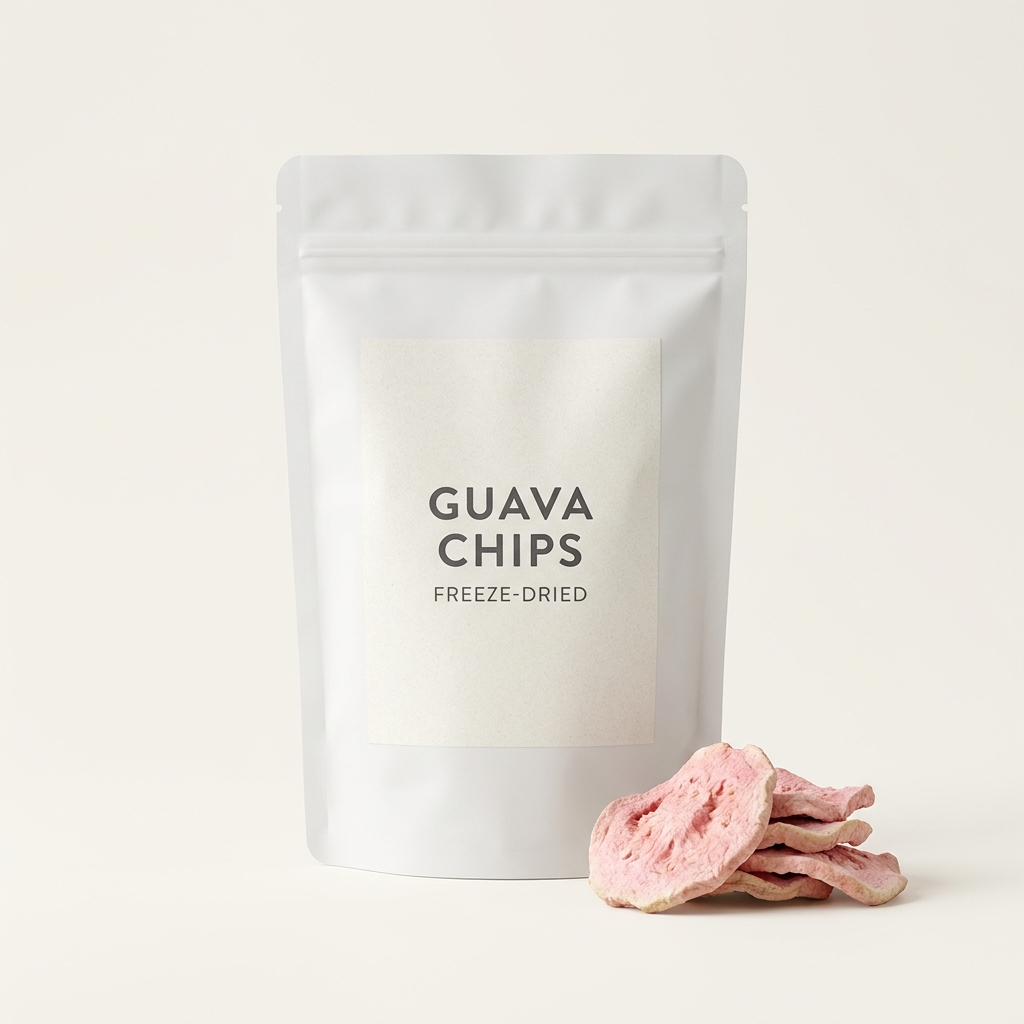
Our freeze-dried slices are cut with the seeds in, so they keep the nutty crunch of the fresh fruit; they go straight from the pouch, crushed over dahi, into a fruit chaat in July, or blended with water into guava juice when there is no guava to be had.
Keeping amrood all year
Fresh amrood lasts days, not weeks, and the season is four months long. Jam keeps it but adds a lot of sugar; dehydrating keeps it but browns it and takes the vitamin C and most of the floral aroma with the heat. Freeze-drying is the one method that keeps the fruit as it was: ripe Larkana white guava is sliced with the seeds in, frozen solid at minus 40 °C and held under vacuum for about a day, so the ice leaves as vapour without ever melting. The slices come out crisp, pale, sweet at the centre and slightly tart at the skin, with nothing added. A sealed pouch keeps for 12 months at room temperature, which gets a December guava to the following November.
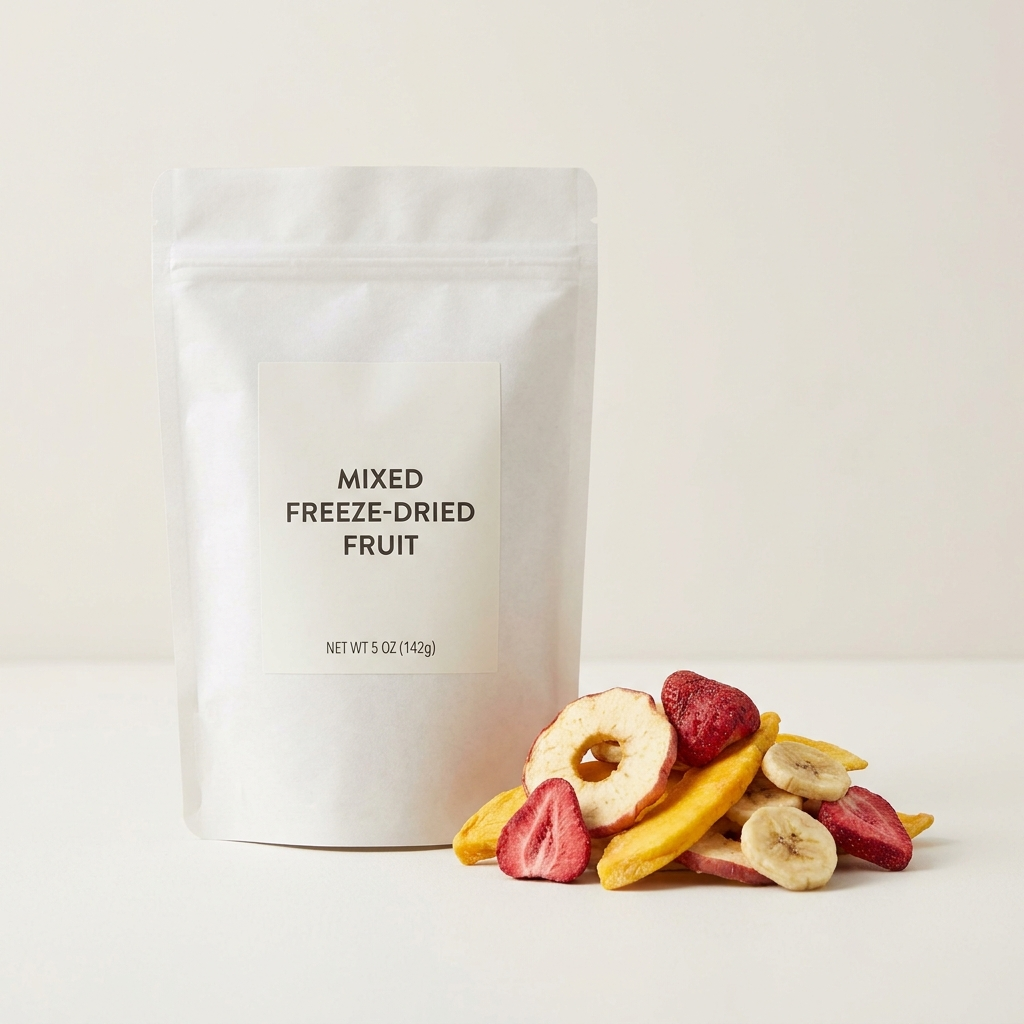
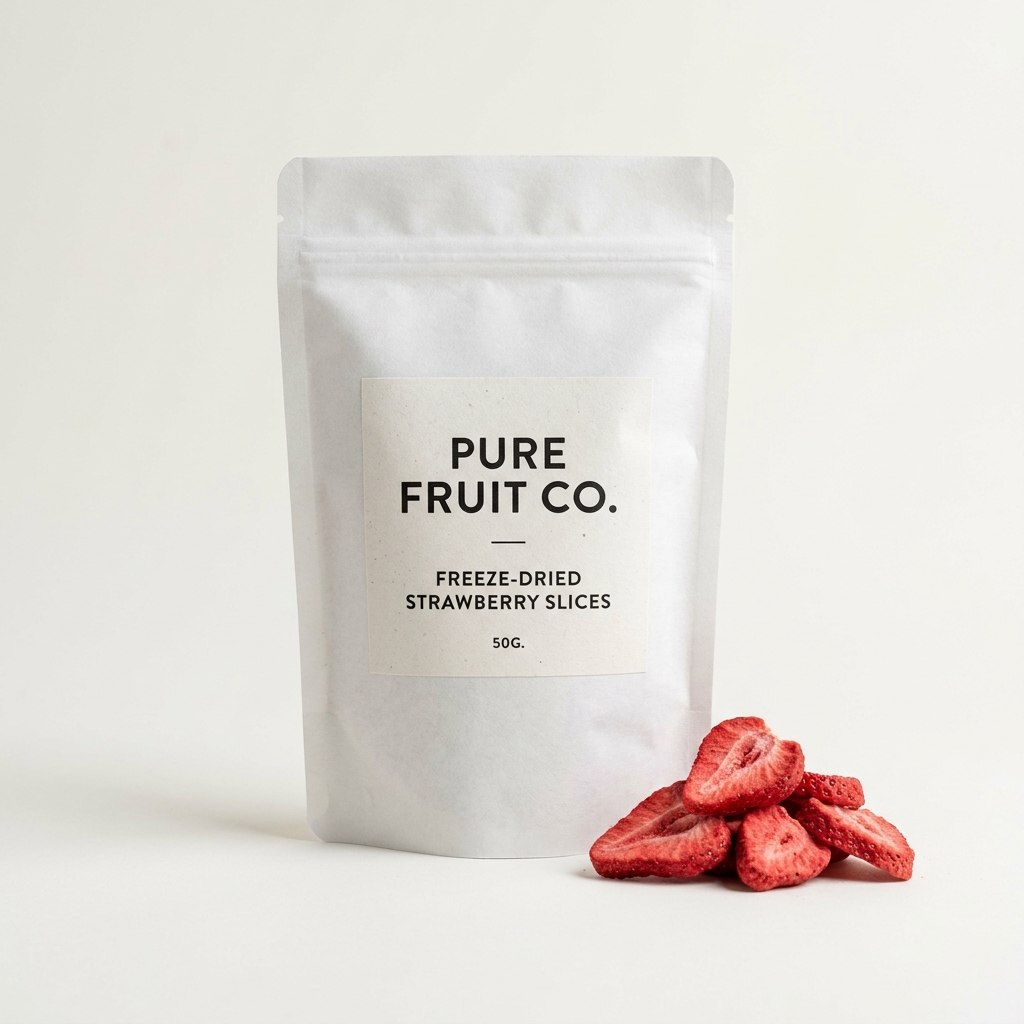
Freeze-dried guava starts at Rs 560 for 50 g, and all our pouches come in 50 g, 100 g, 250 g and 500 g. Delivery is Rs 299 to any city in Pakistan, free over Rs 4,000, with Cash on Delivery, and same-day in Lahore for orders placed before 2pm. Guava is also one of the five fruits in the five-fruit mix.
Sources: production and provincial shares from the Pakistan Bureau of Statistics as summarised by the International Tropical Fruits Network; Larkana season and varieties from APP; fresh-fruit nutrition from the USDA food database; mandi prices from published daily rate lists for 21 October 2026.