Chaunsa is Pakistan's late-summer mango. It ripens in July and August in the orchards around Multan and Rahim Yar Khan, after Sindhri from Sindh has come and gone in June, and it is the mango that carries the second half of the country's export season into September. Pakistan grew a provisional 2.9 million tonnes of mangoes in 2025-26 and shipped around 125,000 tonnes abroad, three-quarters of it to the Gulf, and Chaunsa is the variety most of those boxes hold. In the 2026 season a kilo of Chaunsa sold for roughly Rs 250 to Rs 500 depending on the week and the grade.
This guide covers the season variety by variety, where Chaunsa grows and why it ripens late, the Sindhri-versus-Chaunsa argument, the difference between White and Black Chaunsa, the story behind the name, this year's prices, what is in a mango, how to pick and ripen one, and the only way we know to eat Multan Chaunsa in December.
The season, variety by variety
Pakistan's mango season runs about four months, starting in Sindh in late May and finishing in southern Punjab in September. Each variety has its weeks:
| Variety | Where it grows | When it peaks | What it is like |
|---|---|---|---|
| Sindhri | Mirpur Khas, Tando Allahyar, Hyderabad | Late May to June | Large, oblong, yellow; tangy-sweet, soft, few fibres |
| Anwar Ratol | Multan, Rahim Yar Khan | June | Small; intense, perfumed; the most expensive per kilo |
| Langra | Punjab and Sindh | June to July | Green skin when ripe; sharp-sweet, soft |
| Dusehri | Multan belt | June to July | Small, pale; sweet, fibreless; sold by the dozen |
| White Chaunsa | Multan, Rahim Yar Khan, Muzaffargarh | Early July | Pale yellow; very sweet, juicy, thin skin |
| Black Chaunsa | Same belt | Mid-July to August | Darker green skin; firmer, aromatic; keeps longest |
| Late Chaunsa, Fajri, Neelum | Southern Punjab | Late August to September | The last mangoes of the year |
Chaunsa comes last because southern Punjab is north of Sindh and its spring is cooler, so the trees flower and set fruit later. By the time a Multan Chaunsa is ripe, the Sindh orchards have been picked clean for a month.
Where Chaunsa grows
The Chaunsa belt is the hot, canal-irrigated plain of southern Punjab: Multan, Rahim Yar Khan, Muzaffargarh, Bahawalpur and Khanewal. Punjab grows about seven-tenths of Pakistan's mangoes and Sindh most of the rest, and the two provinces split the calendar between them, Sindh early and Punjab late. Multan's name is on the boxes because its orchards are the oldest and its fruit the best known, but a Rahim Yar Khan Chaunsa from the same week is the same mango.
The climate is the reason it works. A mango tree needs a dry, hot summer to ripen fruit with high sugar and no rot, and southern Punjab in July is as dry and hot as anywhere in the country; the canals from the Indus and the Sutlej supply the water the sky does not.
Sindhri versus Chaunsa
This is the argument every Pakistani family has had, and both sides are right about different things.
Sindhri is the bigger fruit, often 300 to 500 g, oblong, bright yellow when ripe, with soft flesh and almost no fibre. It is sweet with a tang at the edge, which is why it makes the better milkshake and the better sliced mango on a plate. It arrives first, in late May, when the whole country has been waiting nine months, and it is usually the cheaper of the two per kilo.
Chaunsa is smaller, rounder, with a thin, pale skin that goes from green to gold. The flesh is denser, more aromatic and plainly sweeter, with sugars that read higher than Sindhri's on a refractometer, and the stone is small for the fruit. It is the mango for eating by hand: rolled soft, a hole bitten at the stem, and sucked, which is what chusna means. It arrives last, in July, and a good one in the second week of August is the best mango of the year.
If you want a mango to cut, buy Sindhri. If you want a mango to eat, buy Chaunsa.
White Chaunsa, Black Chaunsa and the rest of the family
Chaunsa is a family rather than a single fruit, and the names on the box matter.
- White Chaunsa (Safed Chaunsa, sometimes sold as Summer Chaunsa). The first to ripen, from early July. Pale skin, very sweet, juicy, and the one to eat within two days of ripening.
- Black Chaunsa (Kala Chaunsa). From the second half of July. The skin stays a darker green, the flesh is firmer and the fruit keeps several days longer, which is why it is the exporters' Chaunsa and the one that reaches Dubai and London.
- Sweet Chaunsa and Late Chaunsa. Selections from the same stock that ripen into late August and September, when nothing else is left on the trees.
Where the name comes from
The story on every stall is that Sher Shah Suri named the mango after his victory over Humayun at Chausa, in Bihar, in 1539. It is a good story, and the mango has carried it for centuries along with its older name, Samar Bahisht, "fruit of paradise". It may also be wrong: the writer Sopan Joshi, researching the mango's history, found nobody in Chausa who had heard of the fruit and traced the name instead to a village in Uttar Pradesh called Cheensa. Either way, the variety was spread by grafting in Malihabad before it crossed into what became Pakistan, where southern Punjab turned out to suit it better than anywhere.
What a kilo cost in 2026
Season prices, as quoted by growers and online mango sellers; a street cart in the same week is usually a little lower, and grade and box size move the figure a lot:
| Mango | When | Asking price per kg, 2026 |
|---|---|---|
| Sindhri | late May to June | Rs 200–350 |
| Anwar Ratol | June | Rs 500–750 |
| Chaunsa, in season | July to August | Rs 250–500 |
| White Chaunsa, late season | 27 September | about Rs 500 |
For the whole year's price curve, variety by variety, we are writing a separate price guide. For comparison with the pouch: a 100 g bag of our freeze-dried Chaunsa is Rs 1,390, and roughly a kilo of fresh fruit goes into it.
What is in a mango
Per 100 g of fresh fruit, from the USDA food database: about 60 kcal, 36 mg of vitamin C, 1.6 g of fibre and 14 g of the fruit's own sugars, plus the beta-carotene that makes the flesh orange and that the body turns into vitamin A.
Freeze-drying removes the water, which is most of a mango's weight, and leaves the rest where it was, so the figures per 100 g go up by about the water lost. Our Chaunsa slices, typical values per 100 g: 340 kcal, 62 g of the fruit's own sugars, 9 g of fibre and 1,050 µg of vitamin A. A 25 g serving is about one mango's worth; eat it as fruit.
Picking and ripening a Chaunsa
Chaunsa ripens off the tree, and most of what reaches a city is picked firm. Buy it firm, with no soft patches, and ripen it at home in a paper bag or a box of straw for two to four days; a ripe Chaunsa smells of mango at the stem and gives slightly to a thumb. Keep it out of the fridge until it is ripe, then a day or two inside stops it going over. A mango that is uniformly bright yellow, hard and scentless in June has usually been ripened with calcium carbide; a real Chaunsa is blotchy gold, soft and fragrant, and it is not for sale before July.
Chaunsa after September
The season ends and the fruit does not keep. Cold storage buys weeks, not months; pulp and squash add sugar; dried mango from a dry-fruit shop is usually dehydrated with heat and sugared or oiled, which is why it is brown and chewy and tastes of the syrup.
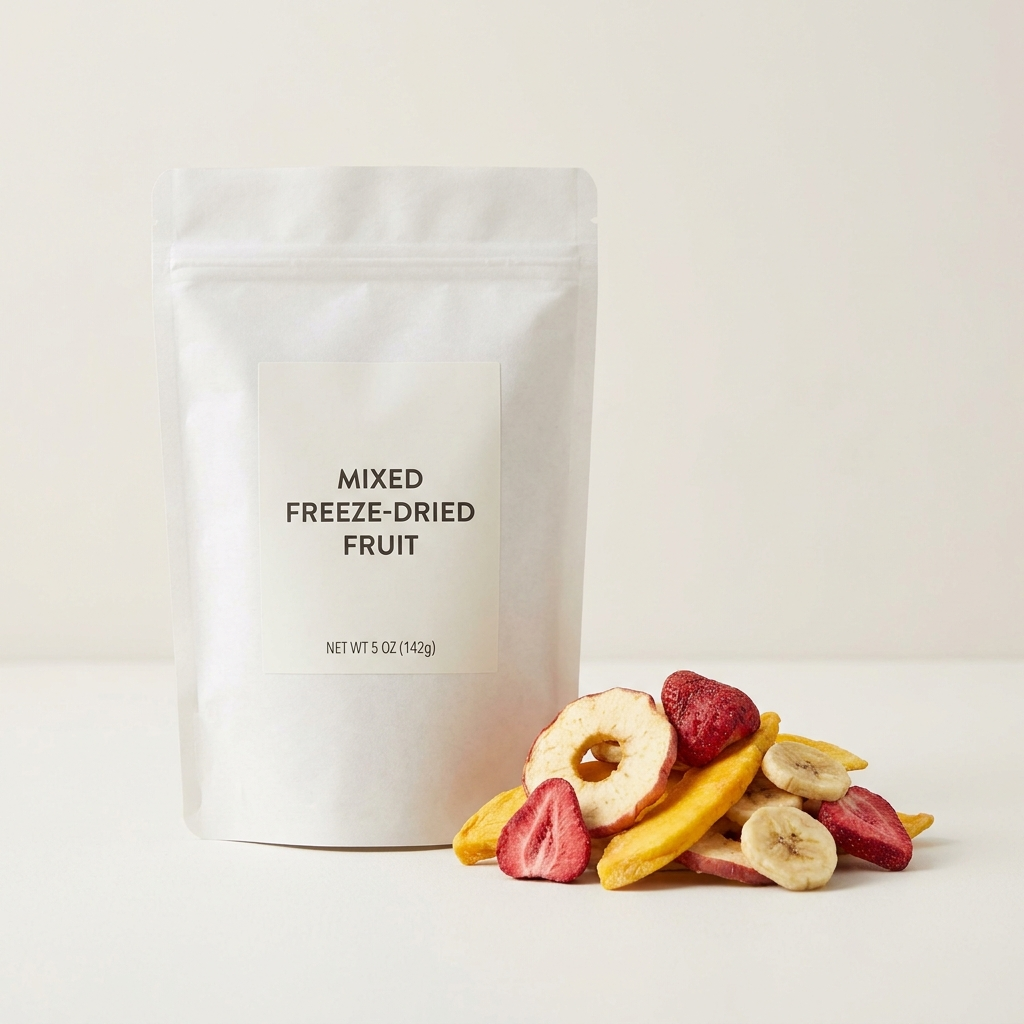
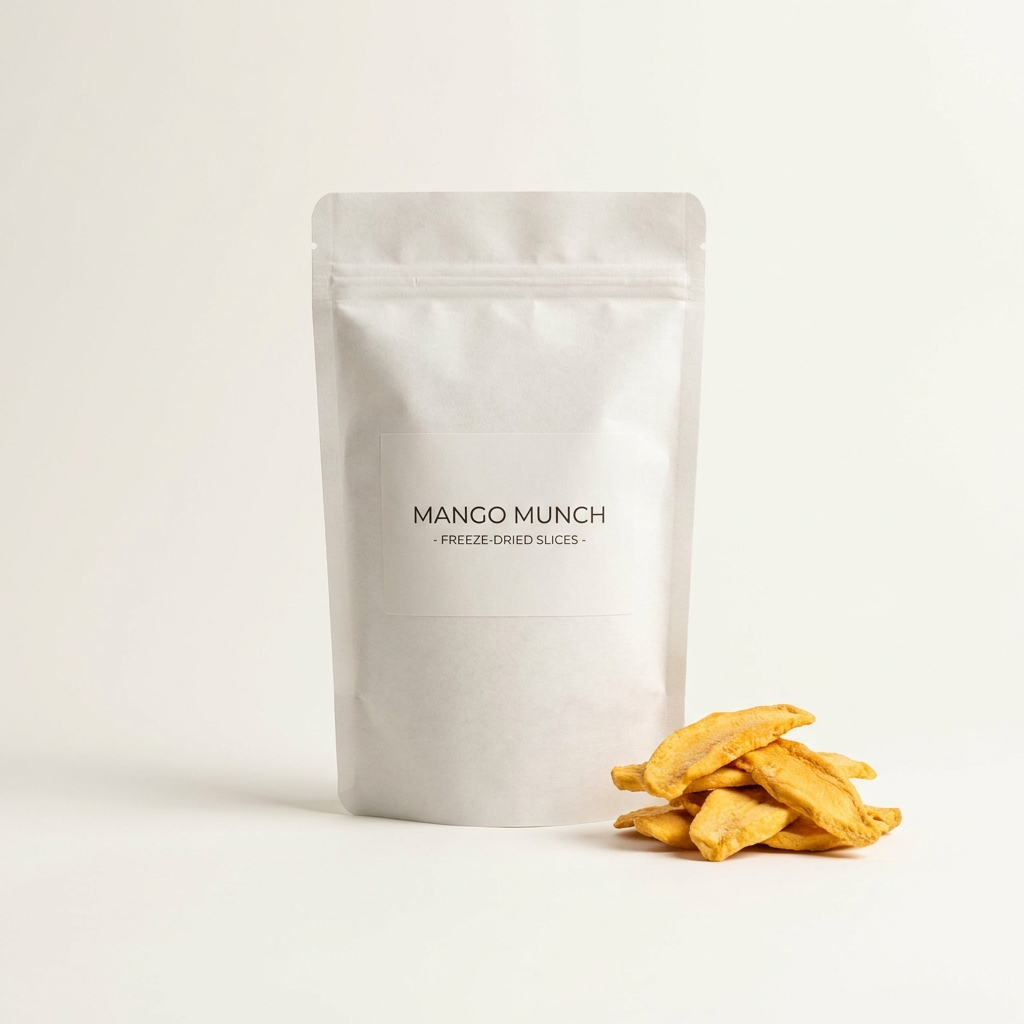
Freeze-drying is the one way to keep the fruit as it was. We slice peak-season Multan Chaunsa thin within a day of it arriving in Lahore, freeze it solid at minus 40 °C and hold it under vacuum for about a day, so the ice leaves as vapour without ever melting. The slices come out crisp at first bite and then chewy as they take up moisture in the mouth, and they taste intensely of ripe mango because mango is all that is in them. A sealed pouch keeps for 12 months at room temperature, which gets an August Chaunsa to the following July. When a Sindhri batch runs in its own weeks of the season, the pouch label says so.
Freeze-dried Chaunsa starts at Rs 750 for 50 g, and all our pouches come in 50 g, 100 g, 250 g and 500 g. Delivery is Rs 299 to any city in Pakistan, free over Rs 4,000, with Cash on Delivery, and same-day in Lahore for orders placed before 2pm. Mango is also one of the five fruits in the five-fruit mix.
Sources: production from the Pakistan Economic Survey 2025-26 as reported by Profit; provincial shares and export markets from the Pakistan Fruit and Vegetable Exporters Association via Khaleej Times; the 2026 harvest and Chaunsa timing from FreshPlaza; fresh-fruit nutrition from the USDA food database; the name story from Wikipedia and Sopan Joshi's Mangifera indica; 2026 prices from growers' and sellers' published lists.