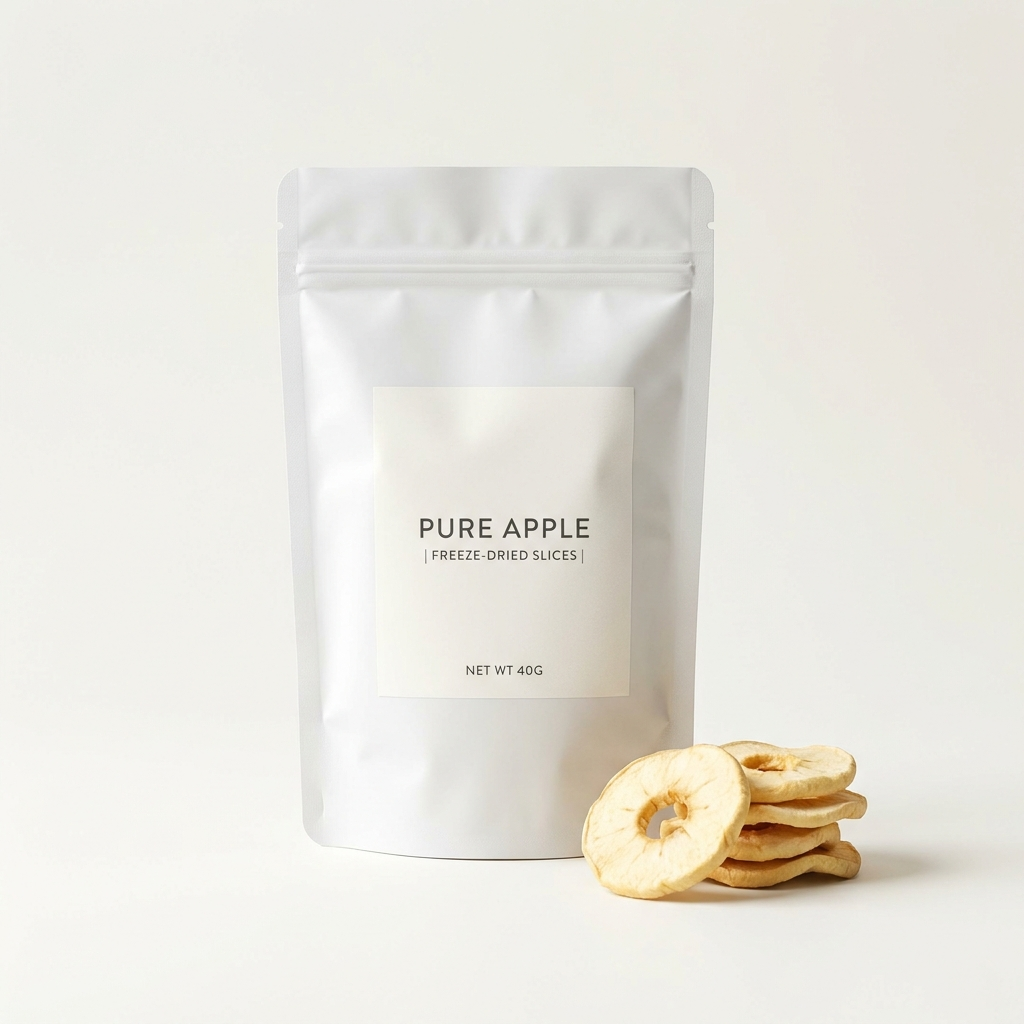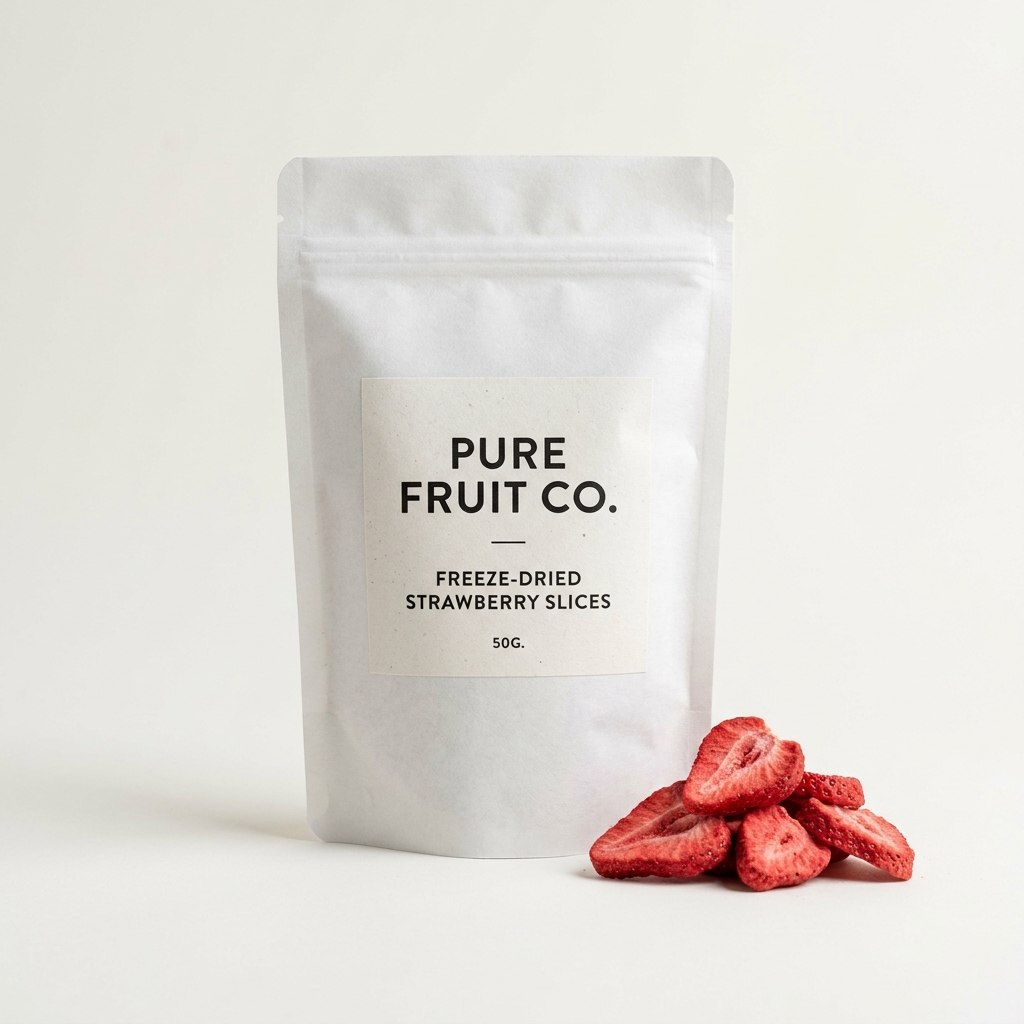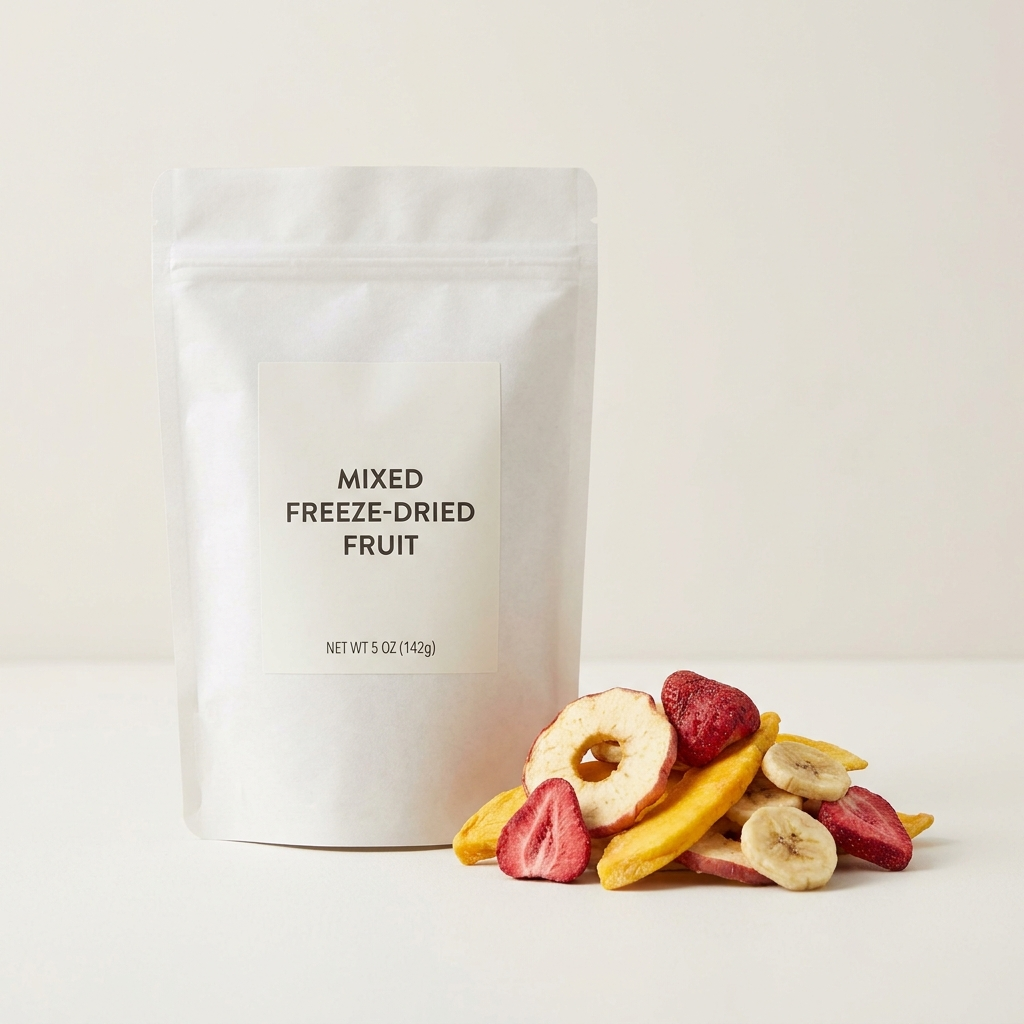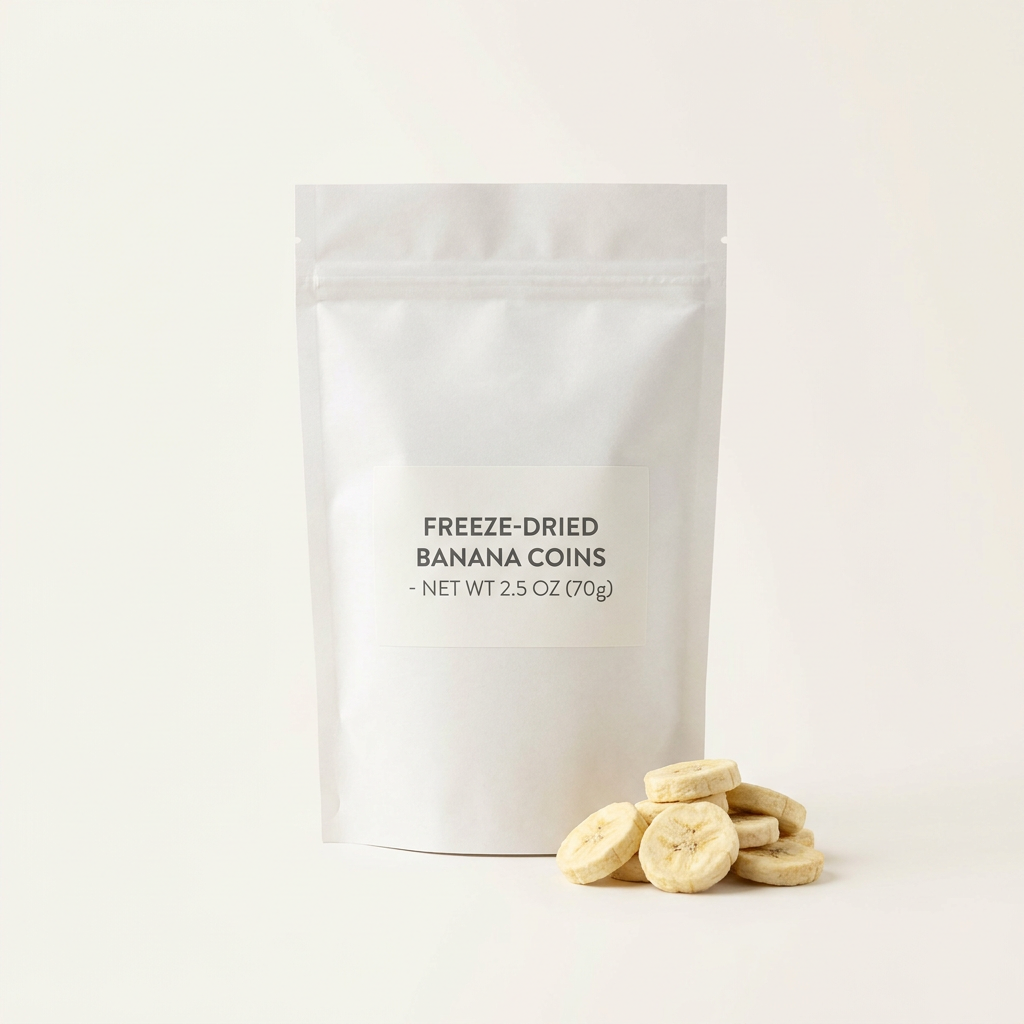
Ask for dried fruit in a Lahore market and you will be shown almonds. Ask for dry fruit online and you will find apricots from Hunza, raisins, and sometimes a pouch of freeze-dried strawberries filed under the same heading. The three words, dry fruit, dehydrated fruit and freeze-dried fruit, are used as if they were one thing. They are three different foods, made three different ways, with different prices, textures, shelf lives and uses.
This guide sets them side by side. We make one of the three, so we have an interest, and we have tried to be fair about the other two: there are good reasons to buy each.
The three, in one table
| Dry fruit (mewa) | Dehydrated fruit | Freeze-dried fruit | |
|---|---|---|---|
| What it is | Nuts, plus sun- or heat-dried apricots, figs, raisins, dates | Fresh fruit dried with warm air or in the sun | Fresh fruit frozen, then dried under vacuum |
| Heat | Roasted or sun-dried | Yes, hours of it | None; never above freezing until it is dry |
| Texture | Hard, oily (nuts); chewy (dried fruit) | Chewy, leathery, or fried crisp | Light, crisp, melts on the tongue |
| Colour | Brown, dark amber | Darkened | The fruit's own |
| Usual ingredient list | Fruit or nut; often salt, sugar syrup, sulphur dioxide | Fruit, often sugar, oil or sulphur dioxide | Fruit only |
| Water left | 5–20 % | 15–25 % | Under 5 % |
| Shelf life | Months (nuts spoil in heat) | 6–12 months | 12 months sealed |
| Sold by | Kilo | Kilo or pack | 50 g to 500 g pouch |
| Where it is made | GB, Balochistan, imports from Afghanistan and Iran | Punjab, Sindh, imports | A handful of units in Pakistan; many imports |
Dry fruit: what Pakistan means by it
In Pakistan "dry fruit" (mewa, khushk meva) is a category, not a method. It covers nuts: almonds, pistachios, walnuts, cashews, pine nuts, peanuts. It covers the traditionally dried fruits of the north: Hunza apricots, dried mulberries, figs, raisins, dates from Khairpur. Most of it is bought in winter and in Ramadan, by the kilo, from a dry fruit shop, and a great deal of it is imported from Afghanistan, Iran and further afield.
It is a fine food. Nuts are fat and protein; dried apricots and figs are fibre and minerals. The things to watch are the ones you can taste: salt on roasted nuts, sugar syrup on some dates and figs, and the bright orange of apricots that have been treated with sulphur dioxide, which is what keeps them from browning. Untreated apricots are brown and taste better. Whole nuts are a choking risk for children under five.
If you typed "dry fruit price in Pakistan" and landed on a page of almonds, that is the meaning Google has learned. It is not what this site sells.
Dehydrated fruit: fruit dried with heat
Dehydrating is the oldest way of keeping fruit. Spread it in the sun, or in a tunnel of warm air at 50 to 70 °C, for anything from six hours to several days, until most of the water is gone. The fruit shrinks and darkens. Because the heat cooks it, the texture becomes chewy and the flavour deeper and more jammy; a dried mango slice tastes like mango and like caramel.
The problems are mostly in what is added. Plain dehydrated fruit is dull-looking and sticks to itself, so it is often rolled in sugar, dipped in syrup, or treated with sulphur dioxide to stay bright. Banana chips, the commonest "dried fruit" snack in Pakistan, are not dried at all in the usual sense: they are sliced, fried in oil and often sugared, which makes them closer to a crisp than to a fruit. Read the back of the pack. A product that says "mango, sugar, sulphur dioxide" is a sweet; one that says "mango" is a fruit.
Heat also costs nutrients. Vitamin C and some B vitamins break down at drying temperatures, and the colour change is the visible sign of it. Fibre, minerals and the fruit's sugars survive.
Freeze-dried fruit: water out, nothing else changed
Freeze-drying removes the water without heat. The fruit is sliced and frozen to around -40 °C, then placed in a vacuum chamber where the ice turns straight to vapour and is drawn off, over a day or more. The slice keeps its size, its shape and its colour, with a honeycomb of empty space where the water was. That is why it is so light and why it snaps and then dissolves: the structure is intact but empty.
Nothing needs adding, because the fruit does not brown or stick and keeps its own colour, so a good freeze-dried fruit has one ingredient. It holds most of its vitamins, including most of the vitamin C that heat drying loses. The flavour is the fresh flavour, concentrated.
It is the newest of the three in Pakistan and the most expensive per gram, for reasons the next section explains. It is also the only one of the three that can give you a Chiniot strawberry in August that still looks like a strawberry.
Sugar, nutrients and the trap of comparing by weight
All three concentrate the fruit's sugar by weight, because the water is gone. One hundred grams of dried apricots has roughly four times the sugar of a hundred grams of fresh ones; a 50 g pouch of freeze-dried strawberries is about half a kilo of fresh strawberries, sugar and all. None of this is added sugar, but it is sugar, and it matters if you are diabetic or counting it for a child. The sensible rule is to portion dried fruit as you would the fresh fruit it came from, not by the pouch.
Where the three differ is what else survives. Nuts are a different food altogether, mostly fat and protein. Heat-dried fruit keeps its fibre, potassium and iron and loses a share of the heat-sensitive vitamins. Freeze-dried keeps nearly all of them. For a child who refuses fresh fruit, a crisp of freeze-dried apple is the closest thing to the apple itself.
What each costs
Dry fruit is priced per kilo and moves with the season and the exchange rate; almonds and pistachios in winter 2026 were several thousand rupees a kilo, and good Hunza apricots a fraction of that. Dehydrated fruit sits in between, usually a few hundred rupees per 100 g for sugared mango or pineapple, less for banana chips.
Freeze-dried fruit is dearer per gram than either, because of the yield. Between five and ten kilos of fresh fruit become one kilo of freeze-dried, and the machine runs for a day per batch. Our prices, live from the catalogue:
| Pouch | Strawberry | Apple crisps | Banana coins | Five-fruit mix |
|---|---|---|---|---|
| 50 g | Rs 790 | Rs 550 | Rs 520 | Rs 700 |
| 100 g | Rs 1,460 | Rs 1,020 | Rs 960 | Rs 1,300 |
| 250 g | Rs 3,360 | Rs 2,340 | Rs 2,210 | Rs 2,980 |
Delivery is Rs 299 and free over Rs 4,000. The fair way to compare a freeze-dried pouch with anything else is per 100 g of fresh fruit equivalent, not per pack: a 50 g pouch replaces a half-kilo punnet, and the punnet, in season, is the cheaper way to eat strawberries. Out of season there is no punnet.
Which to buy, for what
- A winter gift, a wedding, Ramadan. Dry fruit. It is what the occasion expects, and a good mixed box of nuts and Hunza apricots is a generous thing. If the recipient is a child, a diabetic, or has simply had enough almonds, a freeze-dried fruit mix is the gift box that is not sweets.
- A school lunch box. Freeze-dried apple or banana: no oil, no sugar, no mess, no knife, and it survives a bag. Fried banana chips are a crisp; dried mango is usually sugared; whole nuts are not for the under-fives.
- A diabetic. Nuts first, in a handful. Then freeze-dried or plain dried fruit in fresh-fruit portions, with the sugar understood. Never the sugared kind.
- Baking and desserts. Freeze-dried, every time: it crushes into a powder that colours and flavours icing, batter and cream without adding water, and a whole slice on a cake does not bleed. Dehydrated fruit is for fruit cake and chutney, where chewy is the point.
- Trekking and travel. All three travel well. Freeze-dried is the lightest by far; nuts are the most filling.
- Eating the fruit itself, out of season. Only freeze-dried keeps the fruit's own look and flavour. Dehydrated fruit tastes like a different, cooked thing. Nuts are nuts.
A note on the word "dried" on this site
Our products are freeze-dried, and the pages say so. Where a page title says "dried mango" or "dried strawberries" it is because that is what people type, and the first line under the title says how it was dried. If what you wanted was almonds, a dry fruit shop will serve you better than we can, and we would rather say so than sell you the wrong thing.