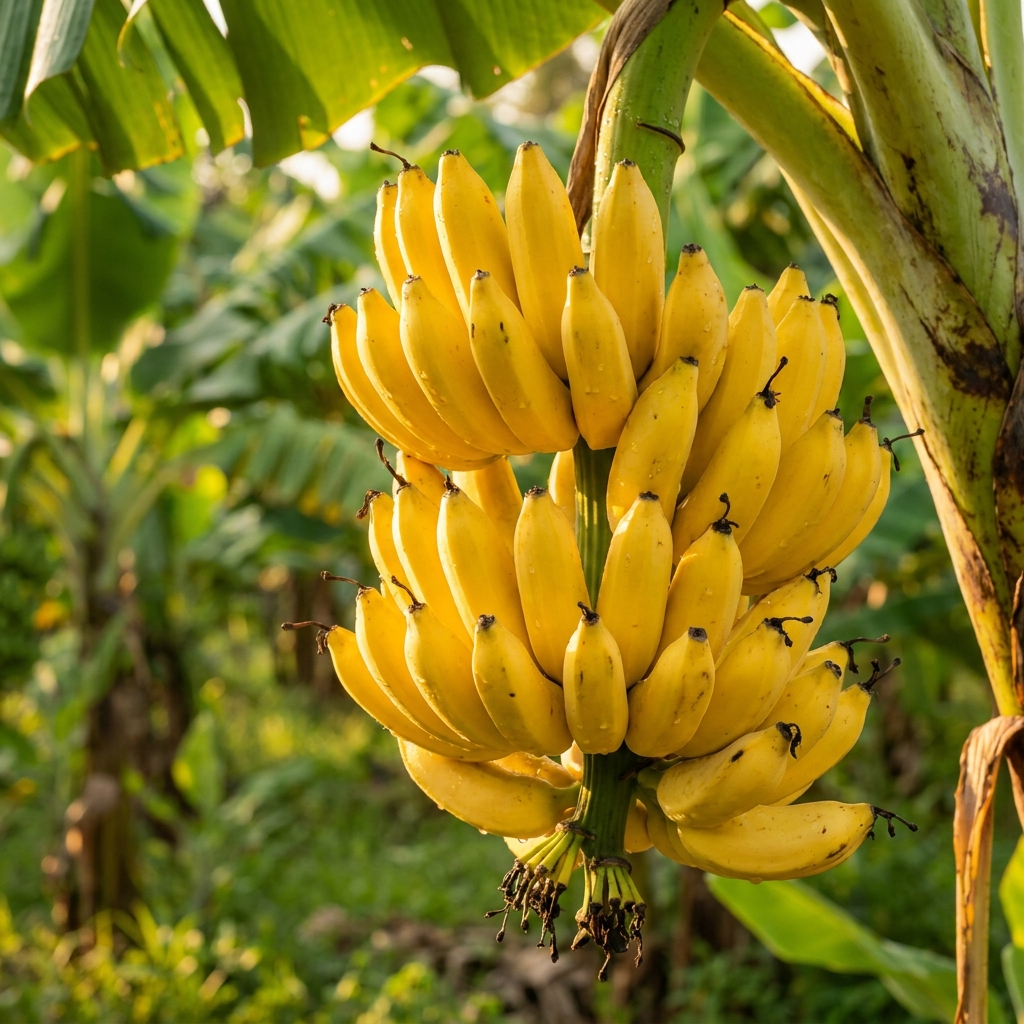
Banana chips are made by slicing firm bananas thin and taking the water out of them. There are four ways to do that in a home kitchen: fry the slices in hot oil (the crisp, salty chips sold by weight at every dry-fruit shop), bake them slowly in an oven, cook them in an air fryer, or dry them in a dehydrator. There is a fifth way, freeze-drying, which removes the water with no oil and no heat at all, but it needs a machine most kitchens will never own.
Frying takes twenty minutes and a cup of oil. The oven versions take two to three hours and come out chewy rather than glassy. Here is each method step by step, with the figures, so you can pick the one that suits what you want the chips for.
Which bananas to use
The chips sold loose in Pakistan are made the South Indian way, from green, starchy bananas sliced before they ripen. A sweet, ripe banana has too much sugar to fry: it caramelises and goes dark before it dries. So the banana you buy depends on the method.
- For fried chips: green or barely yellow bananas, firm enough that a slice holds its shape. The ordinary Sindh bananas sold by the dozen in Karachi and Lahore, mostly grown around Thatta and Tando Allahyar, are fine. Buy them greener than you would to eat.
- For baked or air-fried chips: just-ripe bananas, yellow with no brown spots, still firm. Riper fruit tastes better but will not crisp.
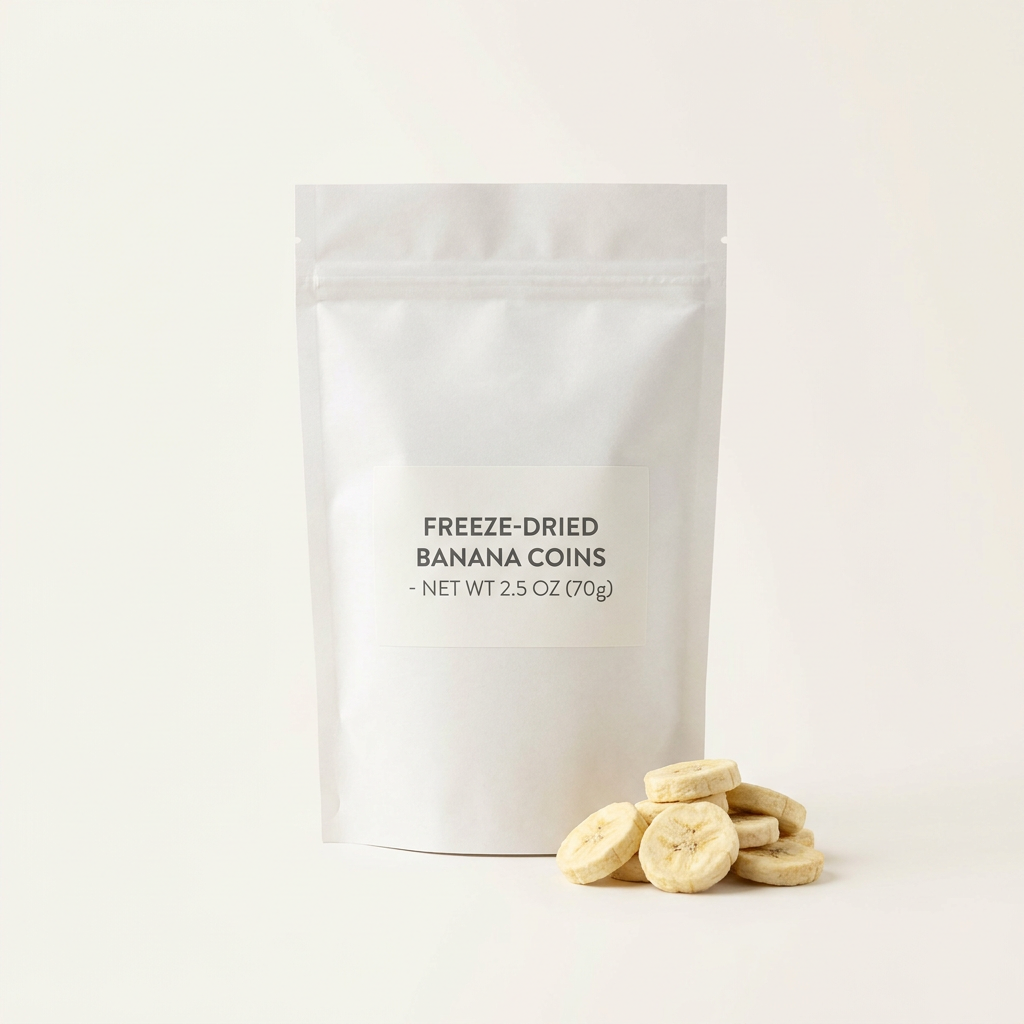
- For freeze-dried coins: fully ripe. Nothing is cooked, so the sugar in the fruit is the whole flavour. Our own coins are sliced from ripe Thatta bananas.
Whatever the method, slice every banana to the same thickness. A mandoline or a cheap plastic slicer does this better than a knife, and even slices are what stop half a batch burning while the other half is still soft.
Method 1: Fried banana chips (the dry-fruit-shop kind)
You need: 6 green bananas (about 1 kg), 500 ml oil for frying, 1 teaspoon of salt dissolved in a cup of water, and if you like the yellow colour of shop chips, a quarter teaspoon of turmeric in that water.
- Peel the bananas and slice them 1.5 to 2 mm thick, straight into the salted water. Leave them for ten minutes. The soak stops them browning and seasons them from the inside.
- Drain and pat every slice completely dry on a cloth. Water in hot oil spits, and wet slices go soggy instead of crisp.
- Heat the oil to 170 to 180 °C. Without a thermometer: a test slice should bubble hard the moment it goes in but take ten seconds or more to colour. Fry in small batches, a handful at a time, stirring gently, for three to four minutes, until the bubbling almost stops and the slices are pale gold.
- Lift them out onto paper, salt them while hot, and let them cool completely. They crisp as they cool, not in the pan.
What you get: roughly 400 g of chips from 1 kg of bananas. A raw banana is about three-quarters water, and almost all of it leaves in the oil, but some oil comes back in its place. USDA's figure for commercial banana chips is about 520 kcal and 34 g of fat per 100 g, which means roughly a third of what you are eating is the oil they were fried in. They keep two to three weeks in an airtight jar before the oil starts to taste stale.
Method 2: Oven-baked banana chips (no frying, some patience)
- Slice just-ripe bananas 3 mm thick and toss the slices in a tablespoon of lemon juice. This is what stops them turning brown.
- Lay them on baking paper in a single layer, not touching. No oil is needed; half a teaspoon brushed over the tray makes them a little crisper if you want it.
- Bake at 110 to 120 °C, the lowest setting on most Pakistani ovens, with the fan on if there is one, for two to three hours. Turn the slices over halfway.
- They are done when the edges curl and a slice that has cooled for a minute snaps rather than bends. Cool them on the tray.
What you get: chewy-crisp chips with no added fat. Fully dried, they are concentrated banana, around 350 kcal per 100 g, the same food as the fruit they came from. The catch is moisture: they take it back from the air within a day or two and go soft, so make what you will eat this week.
Method 3: Air fryer
- Slice 2 to 3 mm, toss in lemon juice, then in a teaspoon of oil for every two bananas.
- Lay them in a single layer in the basket. One banana fills most baskets, so this is a small-batch method.
- Cook at 150 °C for 12 to 15 minutes, shaking the basket at five and ten minutes, then drop to 120 °C for five more minutes to dry them out.
What you get: crisper than the oven, faster, but one banana at a time. Same shelf life as the oven chips: two to three days.
Method 4: Dehydrator
If you own a food dehydrator, 3 mm slices at 57 to 60 °C take eight to twelve hours. They come out deep brown, sweet and leathery, closer to the dried banana sold in jars than to a chip. They keep for weeks because they are properly dry, but they are never crisp.
The no-oil way: freeze-dried banana coins
Freeze-drying is the one method that gives a crisp chip with nothing added. The ripe slices are frozen solid at minus 40 °C, then held under vacuum for about a day. At that pressure the ice turns straight to vapour without melting, so the water leaves and the structure of the fruit stays exactly where it was. No heat touches the banana, which is why the coins stay pale yellow instead of browning, and why they are light enough to dissolve on the tongue.
The figures, from our own pouches: about 700 g of fresh banana goes into every 100 g of coins. Per 100 g the typical values are 330 kcal, 48 g of the banana's own sugars, 10 g of fibre and 1,490 mg of potassium, with zero oil and nothing added. A sealed pouch keeps for 12 months at room temperature.
The honest part: you cannot do this at home. The smallest home freeze-dryers are imported machines that cost well over Rs 500,000, which is why we run ours in Lahore and sell the coins by the pouch instead. A 50 g pouch of freeze-dried banana coins is Rs 520; the 100 g pouch is Rs 960.
Side by side
| Method | Added oil | Time | Texture | Keeps, airtight | Per 100 g |
|---|---|---|---|---|---|
| Fried | About a third of the final weight | 20 minutes | Glassy, salty | 2–3 weeks | ~520 kcal, 34 g fat (USDA) |
| Oven | None, or a brush | 2–3 hours | Chewy-crisp | 2–3 days | ~350 kcal, banana only |
| Air fryer | 1 teaspoon per 2 bananas | 20 minutes | Crisp, small batches | 2–3 days | Banana plus a little oil |
| Dehydrator | None | 8–12 hours | Leathery | Weeks | ~350 kcal, banana only |
| Freeze-dried | None | About a day, plus the machine | Light, dissolves | 12 months sealed | 330 kcal typical, 0 g oil |
Keeping them crisp
Moisture, not heat, is what ruins banana chips. Cool them completely before they go into a jar, because a warm chip steams its neighbours. Keep the jar in a cupboard, not the fridge, where condensation forms every time it is opened. If a batch has gone soft, five minutes in a low oven brings the crunch back. Fried chips have a second enemy, the oil, which turns stale after a few weeks; if they smell like an old frying pan, they are done.
For the freeze-dried pouch the same rule applies: press the air out and close the zip. The coins take in moisture faster than anything else here precisely because they are so dry, and a soft coin is a sign of air, not of spoilage.
What to do with them
- The school lunch box. No nuts, no mess, and a child who will not eat a browning banana at noon will eat the chips. Freeze-dried coins are the ones toddlers manage, because a coin softens to mush in the mouth within seconds.
- Over breakfast. Crushed on porridge, cornflakes or dahi.
- Banana milk. A handful of freeze-dried coins blended into cold milk gives banana milk without the slimy texture of fresh banana.
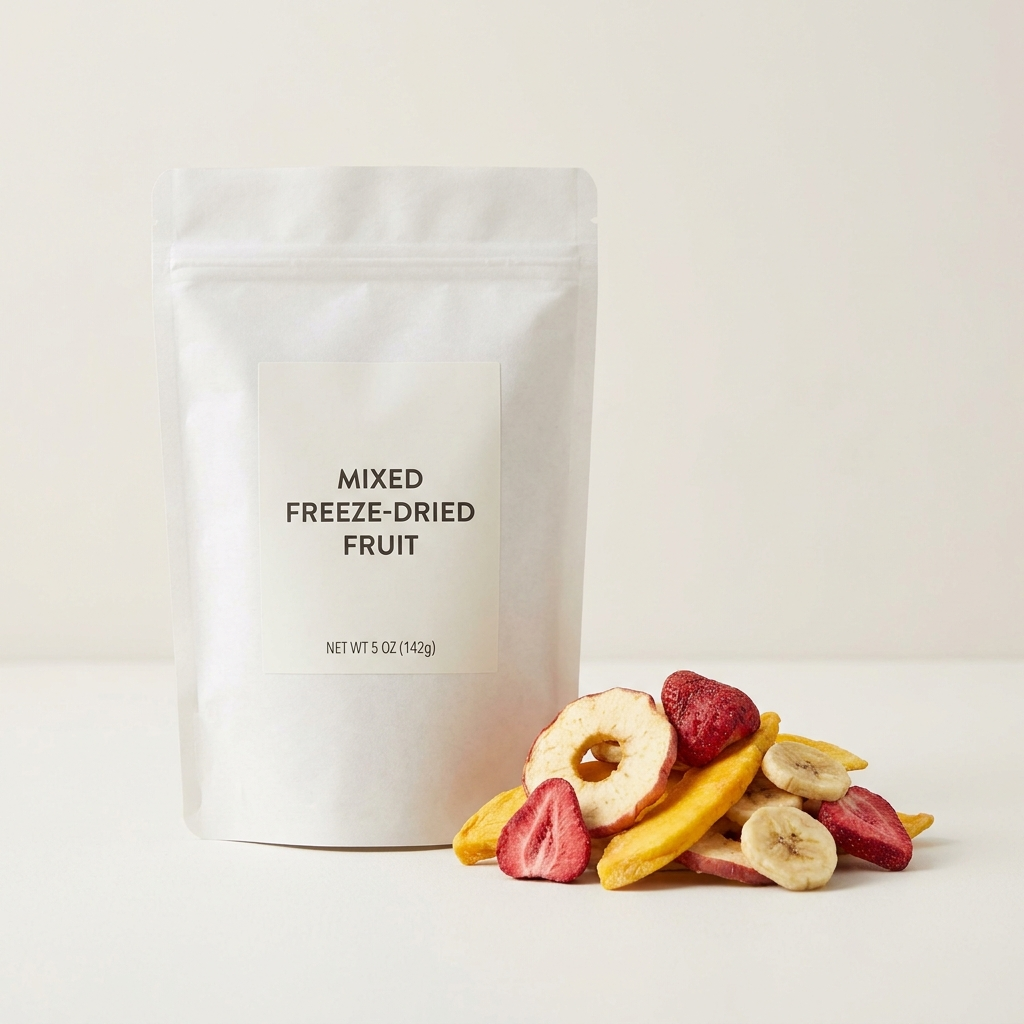
- Trail mix. Fried chips with roasted chana and peanuts for the salty version; freeze-dried banana with the five-fruit mix for the sweet one, and nothing in that bag has ever seen oil.
- Baking. Ten minutes in milk or water brings freeze-dried coins back to a soft banana for banana bread.
Buying instead of making
If what you want is the no-oil chip and you do not want an oven running for three hours, the pouch is the shortcut. Freeze-dried banana coins start at Rs 520 for 50 g, and all our pouches come in 50 g, 100 g, 250 g and 500 g. Delivery is Rs 299 to any city in Pakistan, free over Rs 4,000, with Cash on Delivery, and same-day in Lahore for orders placed before 2pm.