A school lunch box in Pakistan has a harder job than the ones in the pictures. It is packed at seven, carried in a bag that sits at 30 to 40 degrees for most of the year, opened once for a twenty-minute break at half past ten, and the rest is eaten, traded or thrown away by half past one. Nothing in it sees a fridge. So the test for a healthy school snack here is not only "is it good for them" but "is it still food at eleven". Here are fifteen that pass, how much sugar a child should be getting in a day, a Monday-to-Friday plan, the things to leave out, and what changes for the smallest children.
The numbers that matter. The World Health Organization says free sugars, the sugar added to food and the sugar in juice, should be under 10 per cent of a child's energy for the day, and that under 5 per cent is better. For a seven- to ten-year-old that is a ceiling of about 42 g, with 25 g, six teaspoons, as the better target. One 200 ml juice box is about 20 g. The sugar inside a whole piece of fruit does not count against that limit; the sugar in a juice box does. And the background: Pakistan's 2018 National Nutrition Survey found half of children under five anaemic, one in ten overweight, and one in six adolescents overweight, which is the case for a lunch box with protein and iron in it as well as less sugar.
The rules of the box
- Six hours without a fridge. Anything with mayonnaise, cream, cut chicken or dahi is out. Eggs, pulses, bread, whole fruit and dry snacks are in.
- Twenty minutes to eat it. Peel the kinnow, cut the apple, shell the egg. A child will not do it at the break.
- It will be traded. Pack what they will actually eat, not what you would like them to eat; a wholesome box swapped for a packet of nimko helps nobody.
- Ask about nuts. Some schools restrict peanuts and tree nuts because of allergies among other children. Everything below is nut-free, and the two nut options are marked.
- Water, not juice. The bottle is the only drink that needs to go in.
Fifteen snacks that survive until the bell
1. Anda paratha roll. An egg fried into a paratha, rolled in foil. About 7 g of protein from the egg, filling, and still good at noon. The most-traded-for item in any Pakistani school, which is a point in its favour.
2. The two-item box: a boiled egg and a banana. Shelled, in a small box with a pinch of salt in a twist of paper. Protein, potassium and no preparation worth the name.
3. Bhuna chana. Roasted black chickpeas, 50 g in a small container: about 10 g of protein and 5 g of fibre, plus the iron a lot of Pakistani children are short of. Plain, not the masala-coated kind.
4. Kinnow, already peeled. December to February. Segments in a box keep until the break; a whole kinnow comes home whole.
5. Apple slices with lemon. A squeeze of lemon juice stops them browning for four or five hours. Swat apples are in the market all year from cold storage.
6. Amrood slices with kala namak. Winter. Firm, sliced, a pinch of black salt in a twist of paper for them to add.
7. Khajoor and chana. Three dates and a handful of roasted chana: the sweet and the savoury together, and the dates' sugar comes with fibre. Pit the dates for children under six.
8. Home popcorn. Popped in a covered pan with a teaspoon of oil, salted lightly. Light, cheap and the box comes back empty. Not for children under four, who can choke on it.
9. Aloo or daal roll. Last night's sabzi or daal rolled in a roti. The cheapest hot-meal box there is, and it travels.
10. Chana chaat, dry. Boiled chana with chopped onion and tomato in one box, the lemon in a separate twist so the chaat does not go soggy. Onion is optional for the trade value.
11. Corn in a box. Boiled bhutta kernels cut off the cob, with lemon and chaat masala. Sweet enough that nothing else is needed.
12. Cheese and roti. A triangle of processed cheese keeps a morning in a bag; a slice of real cheese in an insulated bag keeps longer. Folded into a roti with cucumber.
13. Nut-free trail mix. Bhuna chana, kishmish, freeze-dried banana coins and a little popcorn, shaken together on Sunday into five small bags. Everything in it is dry, so it keeps all week. (Add peanuts or almonds only if the school allows them.)
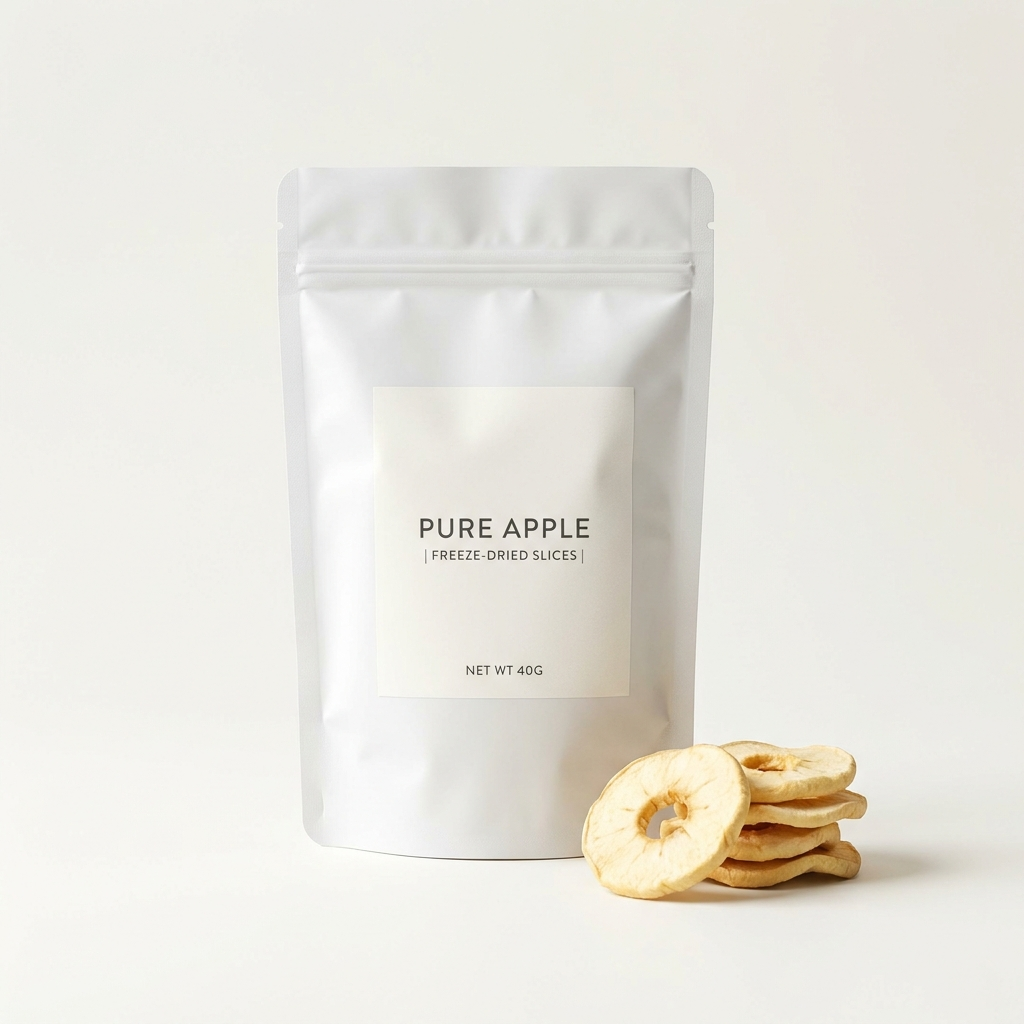
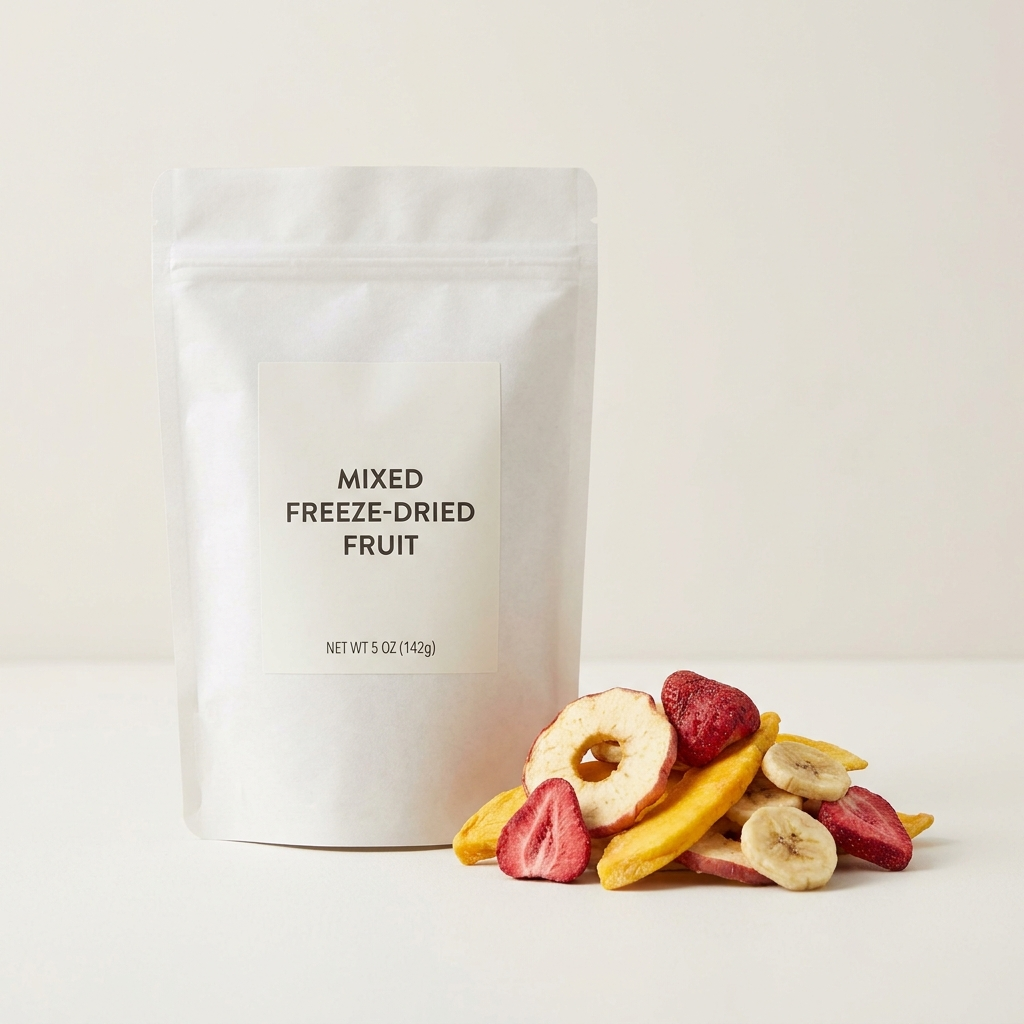
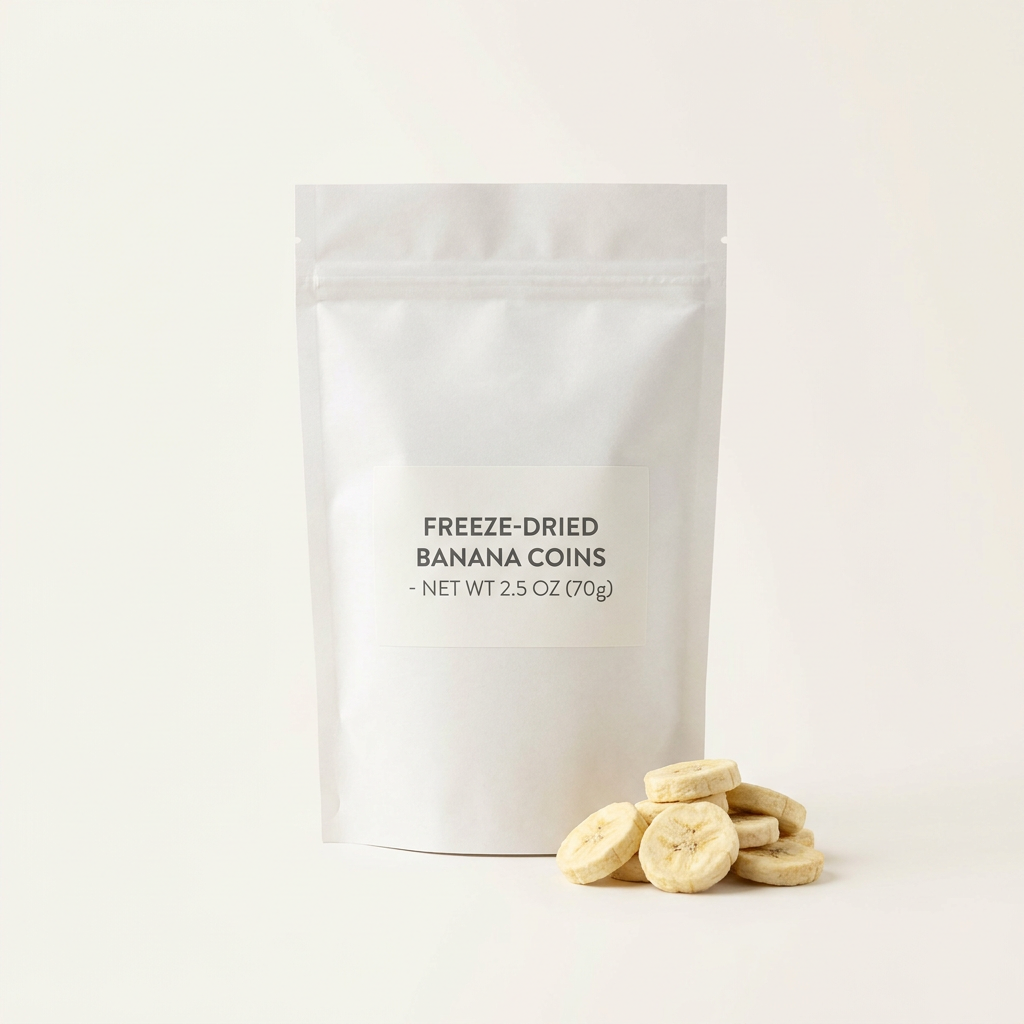
14. Freeze-dried fruit. This is what we make, and the lunch box is the honest case for it. A pouch of banana coins, apple crisps or the five-fruit mix does not melt, brown, bruise or spoil, weighs almost nothing, and has one ingredient. Banana coins dissolve in the mouth, which is why they are the one parents of three-year-olds reach for. The sugar is the fruit's own and the fibre comes with it; because the water is gone, treat 25 g as one piece of fruit and give that, not the whole pouch. A 50 g pouch of apple crisps is Rs 550 and a 100 g pouch of banana coins is Rs 960, which is four to eight lunch boxes.
15. Seasonal fruit, whole. A banana, a small guava, a pear: in its own skin, no cutting, no box. The simplest snack on this page and the one most often forgotten.
A week of boxes
| Day | Main | Fruit | Crunch | Drink |
|---|---|---|---|---|
| Monday | Anda paratha roll | Banana | Home popcorn | Water |
| Tuesday | Chana chaat, lemon separate | Kinnow, peeled | Freeze-dried apple crisps | Water |
| Wednesday | Aloo roll | Apple slices with lemon | Bhuna chana | Water |
| Thursday | Cheese and roti | Amrood with kala namak | Khajoor | Water |
| Friday | Boiled egg and roti | Five-fruit mix, 25 g | Nut-free trail mix | Water |
Swap by season: Chaunsa slices in a box in July (they travel badly, so a small firm one), strawberries from Chiniot in March, and freeze-dried fruit in the months in between.
What to leave out, and why
- Juice boxes and "fruit drinks". About 20 g of sugar in 200 ml, which is most of the better daily limit in one carton, and no fibre. Water.
- Flavoured milk. The sweet ones carry 15 to 20 g of sugar a carton. Plain milk at home instead.
- Chips and nimko. Fried, salted, and the reason the rest of the box comes home. Popcorn or bhuna chana does the same job.
- Biscuits, including the "digestive" ones. Refined flour, sugar and palm oil whatever the name on the packet.
- Chocolate-spread sandwiches. A sandwich-sized serving of chocolate spread is about 11 g of sugar before the bread; it is dessert in a lunch box.
- Fried banana chips. Roughly a third oil by weight. The no-oil version is a different food.
- Flavoured yogurt cups. Would not survive the bag anyway, and the sugar can match a soft drink.
- Instant noodles in a flask. Mostly salt and refined flour; fine once in a while, not as the plan.
The smallest children
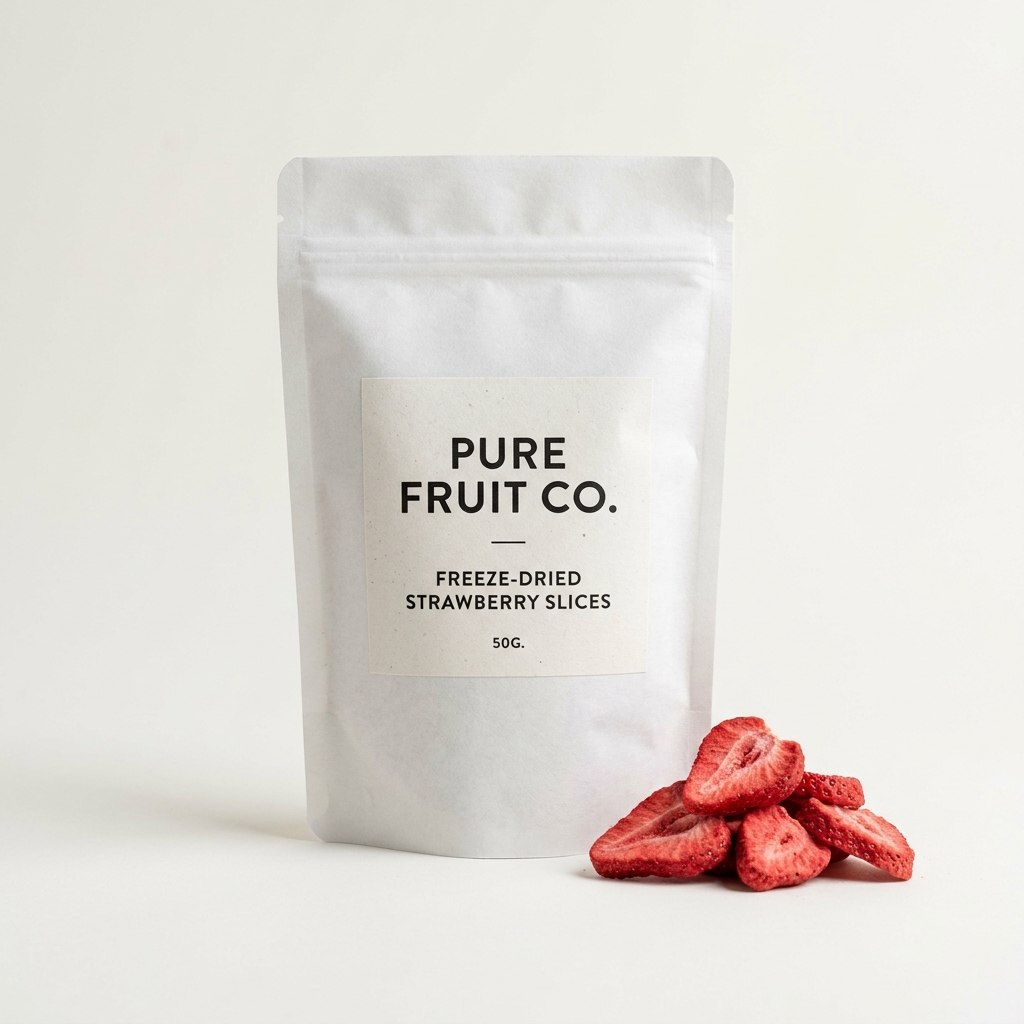
For nursery and KG, three to five years, cut everything small, pit every date, halve every grape, and leave out popcorn and whole nuts, which are choking hazards at that age. Banana coins and freeze-dried strawberry soften to mush within seconds in the mouth and are the pouch to start with; a whole apple crisp is for children who are chewing confidently. Half portions of everything above, and the water bottle they can open themselves.
The shopping list
Eggs, chana, bananas and the fruit in season from the cart; roti and paratha from the kitchen. From us, one pouch at a time: banana coins from Rs 520, apple crisps from Rs 550, the five-fruit mix at Rs 1,300 for 100 g, and everything else in 50 g to 500 g. Delivery is Rs 299 to any city in Pakistan, free over Rs 4,000, with Cash on Delivery, and same-day in Lahore before 2pm, which is in time for Monday if you order on Sunday morning.
Sources: sugar limits from the World Health Organization guideline on sugars intake with age conversions from the Austrian food safety agency AGES; child nutrition figures from the National Nutrition Survey 2018 key findings; nutrient figures from the USDA food database and our own typical values; school canteen rules from the Punjab and Sindh food authorities as reported by ProPakistani.